
Air Quality
If it’s in the air, it’s entering your body.
Everyday products inside modern homes quietly affect indoor air quality — often more than outdoor pollution.
Candles, scented home products, aerosol sprays, cleaning chemicals, disinfectant wipes, hand sanitizer, chlorine released from unfiltered shower water, and even cooking emissions all contribute to what you breathe daily.
This doesn’t mean you need to live in a bubble — but it does mean being intentional about what circulates through your home. Awareness is the first step. Control is the next.
Research has increasingly highlighted how certain indoor air pollutants and endocrine-disrupting compounds can irritate the respiratory system and place added stress on the body — especially for children and those with sensitivities.
The goal isn’t fear. It’s reduction of unnecessary exposure.
The good news: small changes make a measurable difference.
Before buying anything, address the basics:
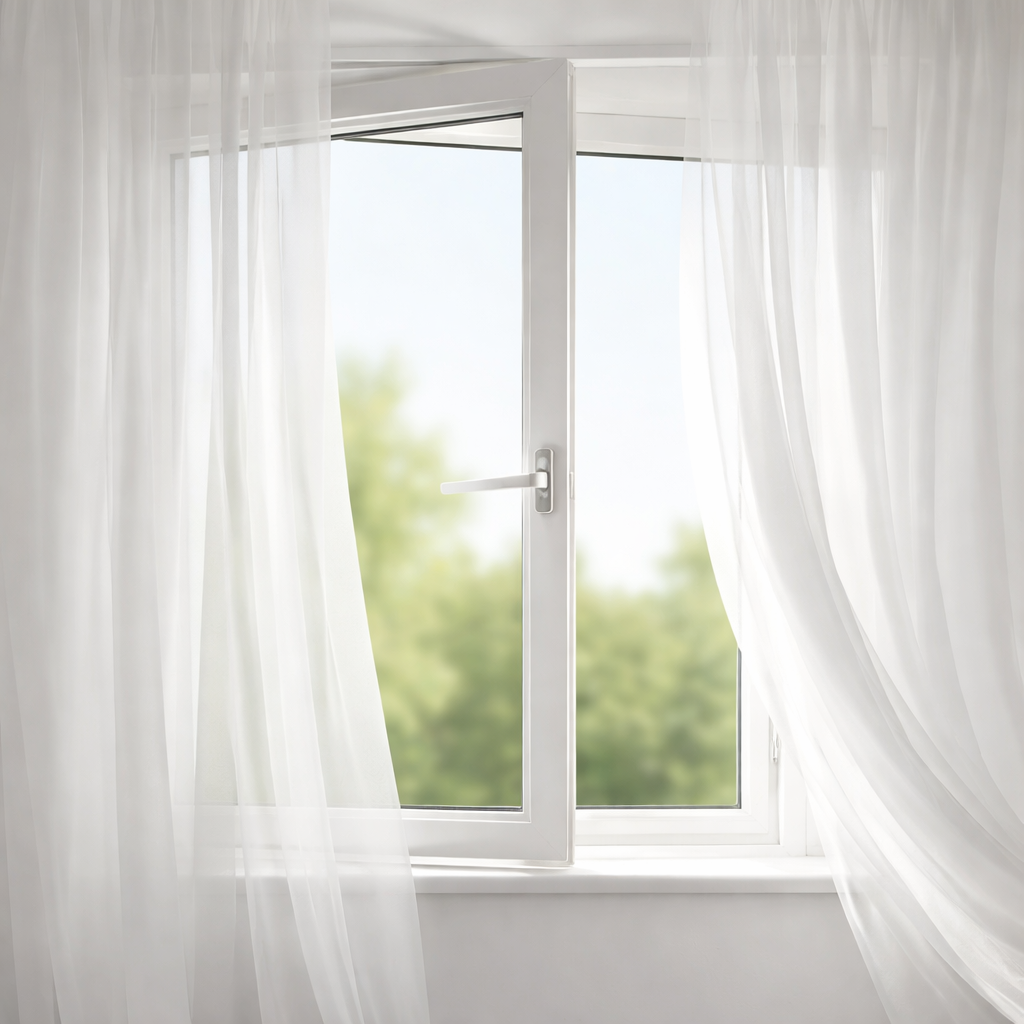
Ventilate your home daily when outdoor air quality allows
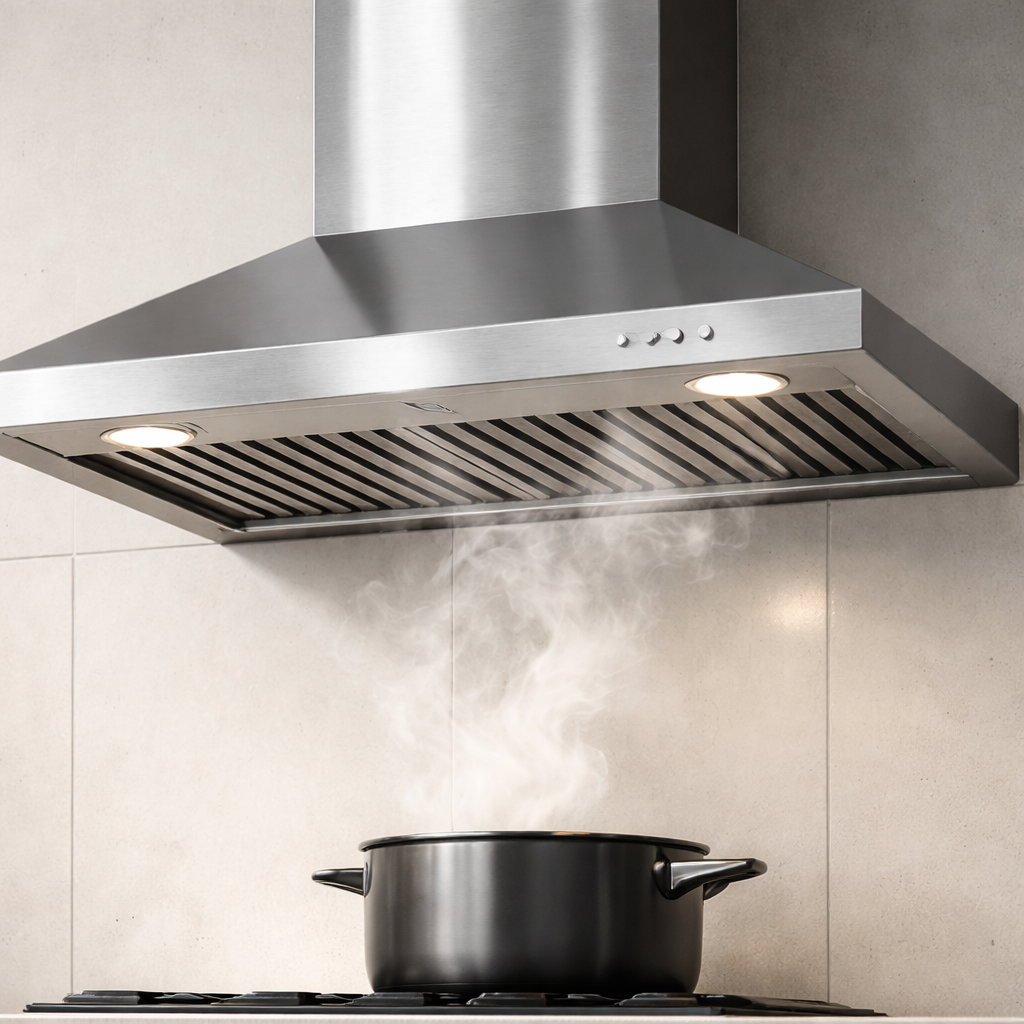
Run kitchen and bathroom exhaust fans during and after cooking or showers
Reduce aerosolized and heavily fragranced products
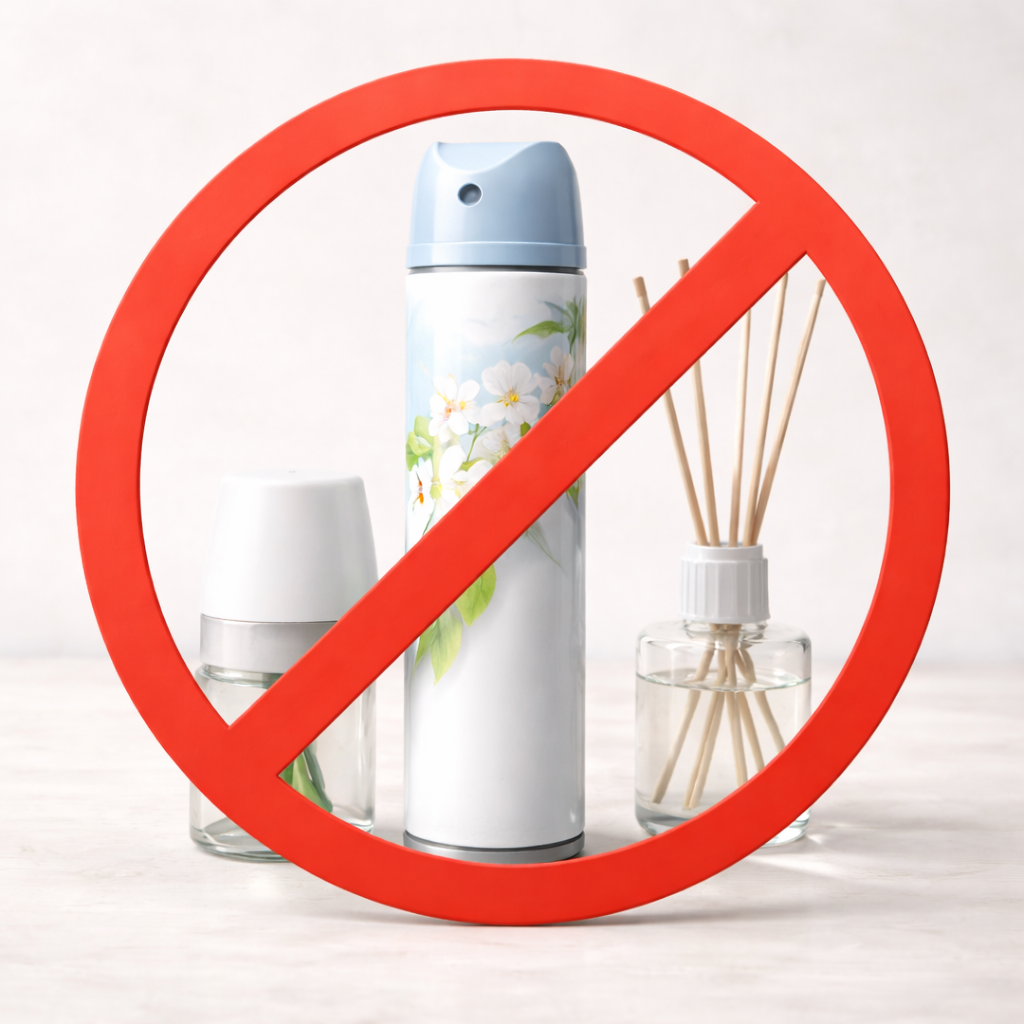
Avoid “odor masking” sprays that add compounds without removing the source
These steps alone can significantly improve indoor air quality.
Once the fundamentals are covered, filtration becomes the next lever.
We’ve done the Hard work for you:
After comparing air purification systems across the market — including filtration performance, materials, noise levels, and long-term ownership cost — this is our top recommendation for improving indoor air quality at home. We prioritize solutions that reduce airborne particles and compounds without introducing unnecessary technologies or tradeoffs.
Transparency matters: If you purchase through the link below, we may earn a small commission at no extra cost to you. Our recommendation is driven by performance and reliability — not payouts.
Understanding indoor air particles
What is PM2.5?
PM2.5 is fine airborne particle pollution small enough to be inhaled deep into the lungs. Indoors, it often comes from cooking, cleaning, and combustion — and standard HVAC filters don’t reliably capture it.
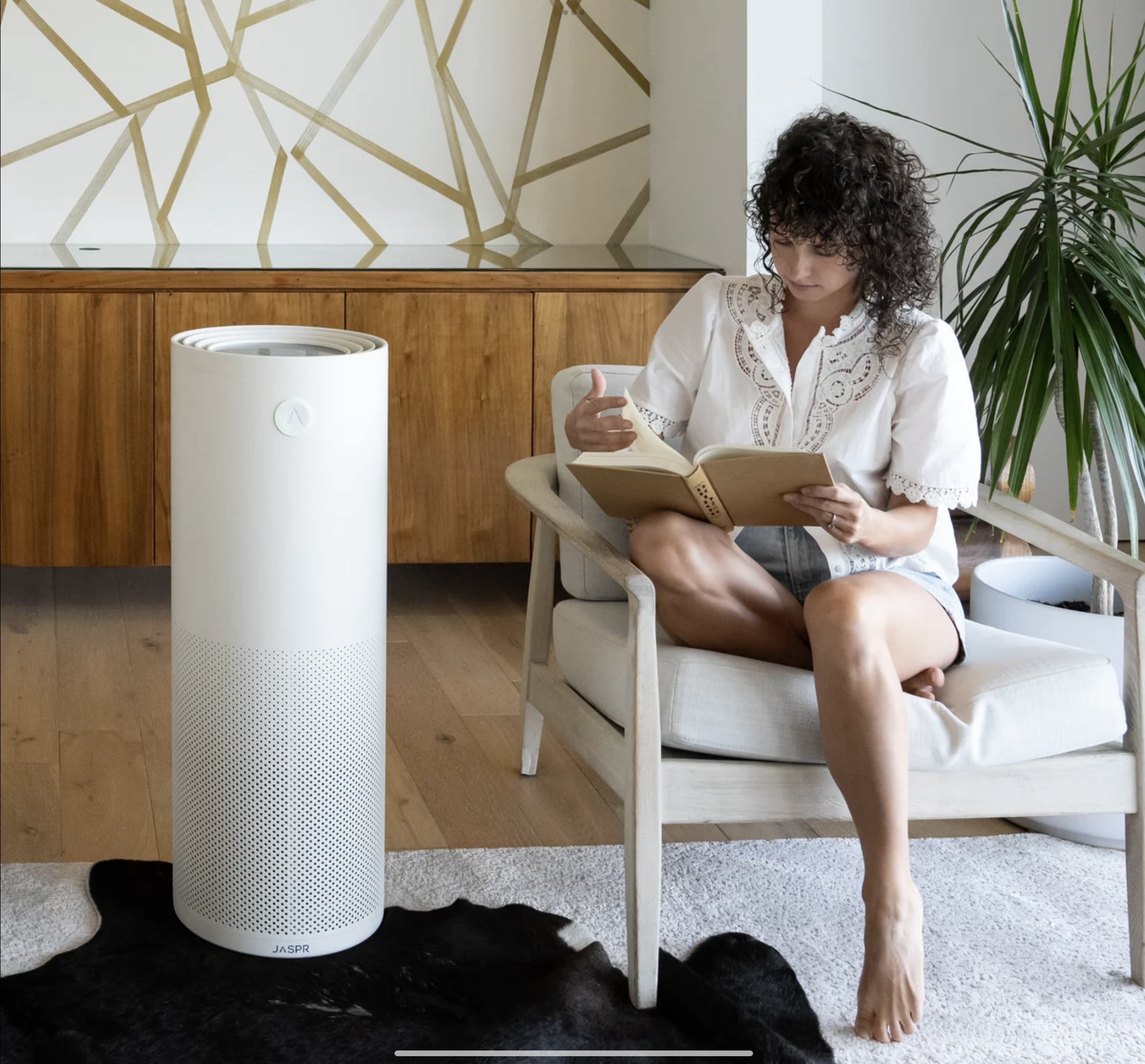
Jaspr Air Purifier
This is a premium air purifier — and yes, it’s an investment. We paid for ours out of pocket and have been using it daily for nearly a year.
After testing multiple options, this is the most effective air purification system we’ve personally used at home.
Most central A/C filters are designed to protect HVAC equipment — not to meaningfully reduce fine airborne particles you breathe every day. Cooking emissions, pet dander, household cleaning products, personal care products, and other indoor sources continuously circulate through your living space, even when they aren’t visible.
What we appreciate about this unit is its commercial-grade build quality, reliable filtration performance, and thoughtful design. It’s constructed from steel rather than lightweight plastic, operates quietly, and was developed by a mold restoration professional who originally built it to protect his own family.
We recommend this system because it aligns with our core values at War on Wellness: health-first decisions, transparency, and long-term solutions — not gimmicks.
If you have questions, feel free to reach out. JASPR also offers a 30-day money-back guarantee for added peace of mind.
Limited-time manufacturer promotion available.